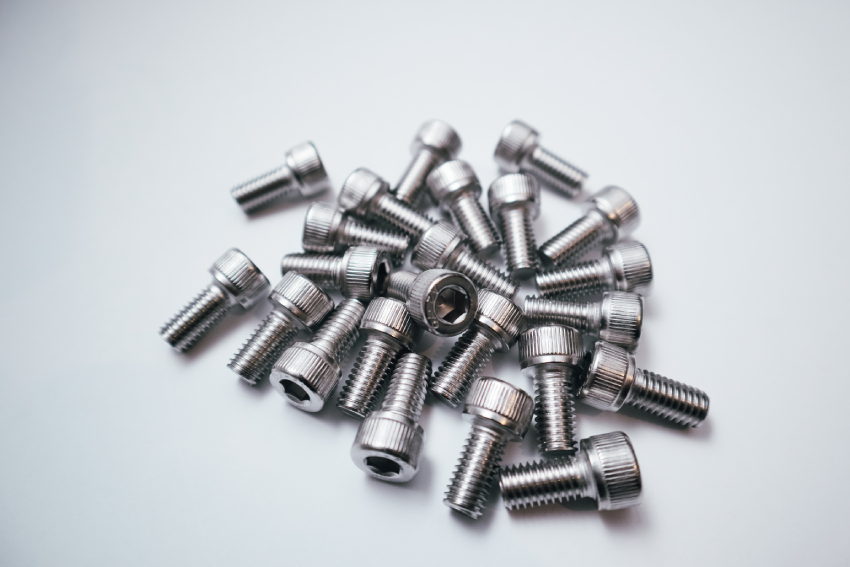
If you have ever wondered why stainless steel screws corrode, the answer usually comes down to grade selection, installation conditions, or environmental exposure. Stainless steel resists rust far better than ordinary carbon steel, but it is not corrosion-proof.
Salt, trapped moisture, contact with other metals, and surface contamination can lead to staining, pitting, or damaged threads. Over time, that damage can weaken a joint and turn a small fastener problem into expensive rework.
Most corrosion can be prevented by choosing the right stainless grade and following sound installation and maintenance practices. Marsh Fasteners supplies corrosion-resistant screws for marine, coastal, construction, and industrial applications.
Shop 316 Stainless Steel Screws
Why Do Stainless Steel Screws Rust?
Stainless steel protects itself through a thin chromium oxide layer that forms naturally on its surface. This passive layer limits the reaction between the metal and its surroundings.
Problems start when that layer is damaged or repeatedly exposed to aggressive conditions. Chlorides from saltwater, coastal air, and de-icing salts are common causes of saltwater corrosion because they can break down the passive surface and create localized attack.
Moisture exposure can create other problems. Crevice corrosion can form beneath washers, inside threads, or anywhere water becomes trapped and oxygen is limited. Contact between stainless steel and a dissimilar metal can also produce galvanic corrosion when an electrolyte such as water is present.
Contamination matters too. Carbon-steel brushes, tools, grinding dust, or metal particles can leave iron on the stainless surface. Those particles rust and may make the stainless fastener appear to be rusting.
For projects with regular chloride exposure, 316 stainless steel screws usually provide better protection than 304.
Common Types of Corrosion Affecting Stainless Steel Screws
Stainless fasteners can show several forms of corrosion, and each points to a different cause.
- Pitting corrosion creates small, concentrated cavities in the surface. Chlorides are a frequent cause, particularly in coastal and marine settings.
- Crevice corrosion develops in tight spaces where moisture collects and oxygen cannot circulate freely. Threaded joints, washers, and overlapping materials can all create these conditions.
- Galvanic corrosion occurs when dissimilar metals are electrically connected in the presence of moisture. The less noble metal in the pairing is usually attacked more quickly.
- Tea staining appears as brown surface discoloration, often after exposure to airborne salt or pollutants. It may begin as a cosmetic issue, but it is also a reason to inspect the installation and improve cleaning.
Correctly identifying the corrosion type helps determine whether cleaning, isolation, drainage improvements, or replacement is needed.
Choosing the Right Grade to Prevent Corrosion
Grade selection has a major effect on service life.
304, often called 18-8 stainless steel, is widely used for general construction, indoor fixtures, freshwater applications, and outdoor projects with moderate exposure.
316 stainless steel contains molybdenum, which improves resistance to chloride attack and pitting. That added resistance makes 316 the preferred choice for docks, boats, seawalls, coastal structures, and many chemical-processing applications. Read our blog on why people choose 316 stainless steel screws.
Choosing the correct grade at the start is one of the most practical ways to prevent stainless steel corrosion and reduce future replacement work.
| Feature | 304 / 18-8 Stainless Steel | 316 Stainless Steel |
|---|---|---|
| Chloride resistance | Moderate | Excellent |
| Best environment | Indoor, freshwater, general outdoor | Coastal, marine, chemical exposure |
| Pitting resistance | Good | Superior |
| Cost | Lower | Slightly higher |
| Typical uses | General construction, indoor fixtures | Docks, boats, seawalls, coastal structures |
5 Installation Mistakes That Cause Stainless Steel Screws to Corrode
Here’s a quick overview of the five installation mistakes that cause stainless steel screws to corrode:
1. Using 304 Stainless Steel in Frequent Saltwater Exposure
304 performs well in many outdoor applications, but direct or repeated exposure to seawater can overwhelm its corrosion resistance.
For marine or high-chloride locations, 316 is usually the better choice. The molybdenum in 316 gives the alloy greater resistance to pitting caused by chloride exposure.
2. Mixing Stainless Steel With Dissimilar Metals
Installing stainless screws directly against carbon steel, zinc, or aluminum can create conditions for galvanic corrosion.
Material compatibility depends on the metals involved, the size of the exposed surfaces, and the presence of moisture. Where necessary, use suitable isolation washers, sleeves, coatings, or other separation methods specified for the application.
3. Contaminating the Fasteners During Installation
A stainless screw can leave the box clean and still become contaminated during installation.
Avoid carbon-steel wire brushes, dirty tools, and nearby grinding operations that can deposit iron particles on the surface. Use clean tools intended for stainless steel work when contamination is a concern.
Surface cleaning and passivation may be appropriate when fabrication or handling has compromised the passive layer.
4. Creating Areas Where Water Cannot Drain
Poor drainage allows moisture, salt, and debris to remain around screw heads and threads.
These low-oxygen areas can promote crevice corrosion. Joint design should allow water to drain and make routine cleaning possible, especially on outdoor and marine assemblies.
5. Skipping Cleaning and Fastener Maintenance
Salt deposits and dirt should not be left indefinitely on stainless hardware.
Routine rinsing with fresh water can reduce chloride buildup in marine environments. Scheduled fastener maintenance also gives crews a chance to spot tea staining or pitting before the damage becomes serious.
An anti-corrosion coating may be useful in some assemblies, but it should not be treated as a substitute for the correct stainless grade.
Prevention checklist:
- Match the stainless grade to the exposure level.
- Isolate incompatible metals where required.
- Keep carbon-steel contamination away from stainless surfaces.
- Design joints so water can drain.
- Rinse salt and dirt from exposed hardware.
- Use an appropriate anti-seize compound where thread galling is a concern.
For commercial quantities, request a wholesale quote from Marsh Fasteners.
Signs Your Screws Are Corroding and What to Do
Early corrosion may appear as light brown staining, discoloration, or a dull surface. These signs are worth investigating before deeper damage develops.
Pitting, rust bleed, rough surfaces, or flaking around the screw head indicates a more advanced attack. Cleaning may help when corrosion is limited to the surface, but fasteners with significant pitting or material loss should normally be replaced.
Replacement also gives you the chance to correct the root cause, whether that means changing the stainless grade, separating dissimilar metals, or improving drainage.
Selecting the Right Screws for Your Application
Start by matching the grade to the environment. 18-8 / 304 stainless steel screws are suitable for many indoor, freshwater, and general outdoor jobs. For coastal, marine, or chemical exposure, 316 is usually the safer specification.
Next, confirm that the thread type, diameter, and length suit the base material and load requirements. Head style and drive type should also match the installation method and desired finish.
Contractors and fabricators can order in bulk through Marsh Fasteners when larger project quantities are required.
Why Contractors and Fabricators Choose Marsh Fasteners
Marsh Fasteners carries 304/18-8 and 316 stainless steel screws in standard and specialty configurations for commercial, industrial, marine, and construction work.
Contractors can source bulk quantities, request wholesale pricing, and get product guidance when grade selection depends on the environment. Reliable stock and shipping are especially useful for Florida and other coastal areas where corrosion resistance is a routine project requirement.
Understanding how to prevent stainless steel fastener corrosion starts with the environment. Use the right grade, avoid contamination, isolate dissimilar metals when needed, provide drainage, and keep exposed fasteners clean.
For anyone researching how to protect stainless steel screws outdoors or improving rust prevention for screws near saltwater, 316 stainless steel is often the practical choice. Marsh Fasteners supplies marine- and industrial-grade fasteners for applications where corrosion resistance matters.
That is also the clearest answer to why stainless steel screws corrode: the alloy can resist corrosion, but its performance still depends on the grade, installation, and conditions around it.
Shop 316 Stainless Steel Screws